From One-Off Programs to Lifelong Partnerships: How AGSM at UNSW Approaches Executive Education
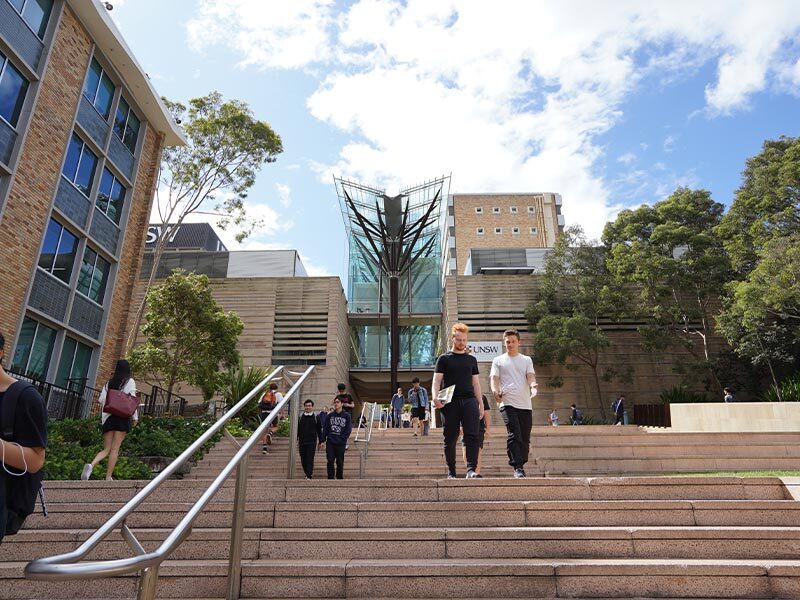
An in-depth conversation with Tracey Flynn, Director of Executive Education and Short Courses, AGSM at UNSW.
At a Glance
Tracey Flynn is the Director of Executive Education and Short Courses at AGSM, the Australian Graduate School of Management at UNSW Business School. She has been with AGSM for more than a decade, joining after a career in financial services where she held senior leadership roles across business development.
In this conversation, Tracey shares how AGSM thinks about lifelong learning, why the school is moving from one-off program delivery towards ongoing partnership models, how AI is changing both the executive education business and the learning experience itself, and the advice she'd give to other providers scaling a short course or executive education business.
Half a Century of Leadership Development
AGSM celebrates its 50th anniversary in 2027. The school was originally established to respond to Australia's need for greater leadership and management development capability, and has grown steadily from that starting point. UNSW itself is a globally ranked university with more than seventy-five years of history, and AGSM was recently named Australia's number one executive education provider by the Financial Times.
UNSW is a globally ranked university, and AGSM's focus has always been on leadership and management development. Fifty years ago, it was established to respond to the need for greater leadership and development capability in Australia, and it's grown from that point ever since.
AGSM organises its work around three program suites. The first is its MBA programs, which develop senior leaders and executives across sectors. The second is its portfolio of leadership and skills-based short courses, designed to help individuals advance their careers. The third is its work with organisations directly, building capability at scale. Across all three, AGSM draws on the expertise of the wider UNSW ecosystem and contextualises it for the learners in front of them. What stays consistent, Tracey says, is a commitment to developing leaders who can navigate complexity, drive performance, and have a real impact within their organisations and communities.
Who AGSM Serves
AGSM's typical customer is a post-experience professional, or an organisation looking to build capability and prepare for future growth and transformation. For individuals, that often means developing leadership capability, advancing a career, or building new skills to keep pace with a changing market. Many are in senior leadership roles already; others are considering a shift into a different part of their organisation or a new sector altogether, and need to strengthen skills that may not carry them as far as they once did.
For organisations, the focus is on building capability at scale, whether that's developing future leaders, supporting transformation agendas, or building a pipeline of talent through every layer of the business. AGSM works with both government and private sector clients, including some where every employee, not just those in leadership roles, is seen as a leader in training and given a learning pathway of their own.
Tracey points to the growing complexity individuals are navigating: the advancement of AI and technology, a shifting geopolitical landscape, business model transformation, and multiple generations working side by side within the same organisation. Building the skills, capability, and confidence to lean into that complexity, she says, is critical for leaders today and for the leaders of the future.
A Proactive Stance on Lifelong Learning
AGSM's strategy is built around a particular view of what learning is for. Professional standing and early-career success no longer guarantee relevance later on, so the school treats capability building as an ongoing process rather than something that happens once and is then complete.
The idea of learning is no longer something that happens at one point in time, but rather a continuous process of capability building, reinvention, and staying relevant in a changing world.
That view is shaped by what Tracey describes as a genuinely complex operating environment: emerging technology, geopolitical uncertainty, changing business models, and evolving workforce expectations. Skills that made someone successful today aren't necessarily what will carry them into the future, which is driving growing demand for development that's current, practical, and can be applied immediately in the flow of work.
Three Ways to Partner
AGSM structures its executive education offering around three channels. The first is its open enrolment portfolio: currently 26 programs focused on leadership development and critical business skills, delivered through a mix of face-to-face and online formats. Its flagship offering is the General Manager Program, and it has recently added an emerging suite of AI-focused programs that Tracey says are attracting significant interest.
The second channel is custom programs, built in close collaboration with individual organisations to design capability uplifts aligned to their specific strategic priorities. These are highly contextualised and often centre on leadership transformation, culture, innovation, or future capability needs.
The third, and newest, channel is long-term learning partnerships, where AGSM acts as an organisation's principal learning partner over an extended period. In these arrangements, AGSM brings the breadth of the whole UNSW ecosystem, research, industry expertise, leadership capability, and technical knowledge, into a single ongoing relationship.
One of the real strengths of AGSM and UNSW is the breadth of our expertise across the university ecosystem. Through our partnerships, we bring together research, industry expertise, leadership capability, and technical knowledge. Importantly, this aligns to UNSW's broader Progress For All strategy, ensuring we are creating meaningful impact through education, capability building, and industry engagement.
Executive Education at an Inflection Point
Open and custom programs might look distinct, but Tracey sees them as highly integrated, each serving a different version of the same underlying need. Open programs let individuals invest in their own development alongside like-minded peers from across a sector. Custom programs give organisations a way to contextualise learning around their own strategic priorities, usually with a cross-section of people drawn from different parts of the same business.
What ties both together, in Tracey's view, is a broader moment of change across the industry.
What's exciting right now is that executive education is at a real inflection point. I'd argue there has never been a more important time for individuals and organisations to invest in development and continuous learning. The pace of technological change, AI evolution, business model disruption, and workforce transformation means that capability no longer remains static. As AI continues to evolve, human capabilities such as leadership, judgment, decision-making, creativity, communication, and ethical decision-making become more important than ever.
She sees the future of executive education as more integrated and more continuous: deeply connected to both organisational transformation and individual growth, rather than delivered as a series of separate, unconnected programs.
Widening Access Through Partnership
Long-term learning partnerships have so far been the domain of AGSM's larger clients, but Tracey is clear that this model shouldn't be limited to organisations with the scale to commission bespoke programs. AGSM is preparing to launch a new partner program that will let organisations pre-purchase learning access for their employees across the full open enrolment portfolio.
The aim is to create an ongoing, strategic relationship with a client rather than one limited to a single program or intervention. It gives employees the flexibility to access learning when it's most relevant to their career stage or capability area, and gives organisations better visibility over how capability is developing across their workforce. It also reflects a broader shift toward integrated, lifelong workforce capability strategies, where learning becomes an ongoing partnership rather than a one-off event, and makes AGSM's partnership model available to small and medium enterprises that would otherwise need to commit to a full custom program to get similar support.
A For-Purpose Institution
Commercial sustainability matters to AGSM because it funds ongoing research and innovation, but Tracey is quick to point out that UNSW remains, at its core, a for-purpose institution. UNSW's ten-year strategy, Progress For All, is built around four pillars centred on societal impact, delivered through education, research, and community engagement.
One example Tracey highlights is AGSM's Indigenous leadership programs, one of which was recently recognised in the Global EFMD Awards for its impact on building leadership capability. The programs are designed to help participants build leadership capability while, in Tracey's words, learning to "walk in two worlds."
AI as an Enhancer, Not a Replacement
AI is reshaping both the operational side of executive education and the learning experience itself, but Tracey is clear that the real value lies in combining AI capability with the distinctly human capabilities discussed earlier. AGSM is already exploring AI-enabled coaching that gives learners more personalised feedback throughout their development, alongside immersive technologies like virtual reality that create safe, low-risk environments where participants can test decision-making, apply leadership concepts, and build confidence before facing the real thing.
AI is significantly reshaping executive education and learning itself, but the ultimate value comes from combining that capability with the distinctive human capabilities we've spoken about. We're already exploring innovations such as AI-enabled coaching, where learners receive personalised feedback and support throughout their development journey, and leveraging immersive technologies like virtual reality to create safe practice environments where participants can apply leadership concepts, test decision-making, and build confidence.
Used well, Tracey sees these tools as a way to reinforce the core learning experience, whether that's delivered face-to-face or virtually, rather than replace it. The goal is to help people lean into what can be an uncomfortable stretch of learning, since that discomfort is often where the most meaningful development happens. Done properly, she argues, AI has the potential to make that kind of learning both safer and more scalable.
Advice for the Industry
Asked about the biggest commercial mistake other providers make, Tracey points to a lack of clarity about differentiation. As executive education becomes more competitive and organisations grow more discerning about where they invest their learning and development budgets, simply delivering content is no longer enough.
Providers need to clearly articulate the value they bring, whether that's through expertise, research capability, industry relevance, the learning experience, partnerships, or the ability to create measurable impact. Importantly, it's also worth placing a strong focus on credentialing and validating professional development. Across our portfolio, learners aren't just building capability, they're also earning recognised credentials that validate their ongoing professional growth. As lifelong learning becomes more important, individuals want development that is both practical and recognised in the market.
Her advice for anyone scaling a short course or executive education business is to find like-minded partners.
What people are seeking today can't be provided by one organisation on its own, you need an ecosystem, a suite of partners. My advice would be to find people you have genuine, strong partnerships with: aligned around purpose and capability development, and built for the long term rather than a single transaction. We've been working with Guroo Learning for a number of years, and I think the fact that we're both so focused on delivering outcomes for our customers is exactly what allows us to create real impact together. Not everyone can solve every problem. Stay focused on creating value, and build trusted partnerships at scale.
Key Takeaways
The conversation with Tracey surfaces a set of principles that apply well beyond AGSM:
- Lifelong learning is the strategic core, not a program category. AGSM treats learning as continuous rather than a one-off event, and its whole model is structured around that idea.
- Individual and organisational needs are converging. Both are ultimately trying to solve the same problem: building capability fast enough to keep pace with change.
- Research is a genuine differentiator. Drawing on UNSW's own research gives AGSM evidence for which human capabilities to build for, rather than just responding to what's commercially popular today.
- Partnership models are moving down-market. What was once reserved for the largest corporate clients is being redesigned so small and medium organisations can access it too.
- AI's role is to deepen the human side of learning, not replace it. AGSM is using AI and immersive technology to personalise coaching and simulate high-stakes practice, while treating leadership, judgment, and creativity as the capabilities that matter most.
- Differentiation and credentialing go together. Standing out in a crowded market means being able to prove the value delivered, not just describe it.
Read the case study
See how AGSM scaled executive education to more than 60,000 learners through Guroo Academy, without adding headcount. Read the full AGSM case study.
About This Series
Founded in Practice is an interview series produced by Guroo Learning, featuring leaders of professional education businesses sharing insights and lessons learned on successfully running a short course or executive education operation.
BOOK A 30-MINUTE PERSONALISED DEMO
Spend less time juggling tools and more time running your business.
See how Guroo Academy connects your courses, clients, payments and operations in one platform.